How three Year 7 scientists became UQ Wonder of Science Regional Champions
Year 7 Academic Excellence students Isla Campbell, Frances Carrasco Bastidas and Sasha Thomas were named Regional Champions at The University of Queensland's Wonder of Science Regional Conference in Term 4. Their classification project earned them a place at the State Conference at UQ.
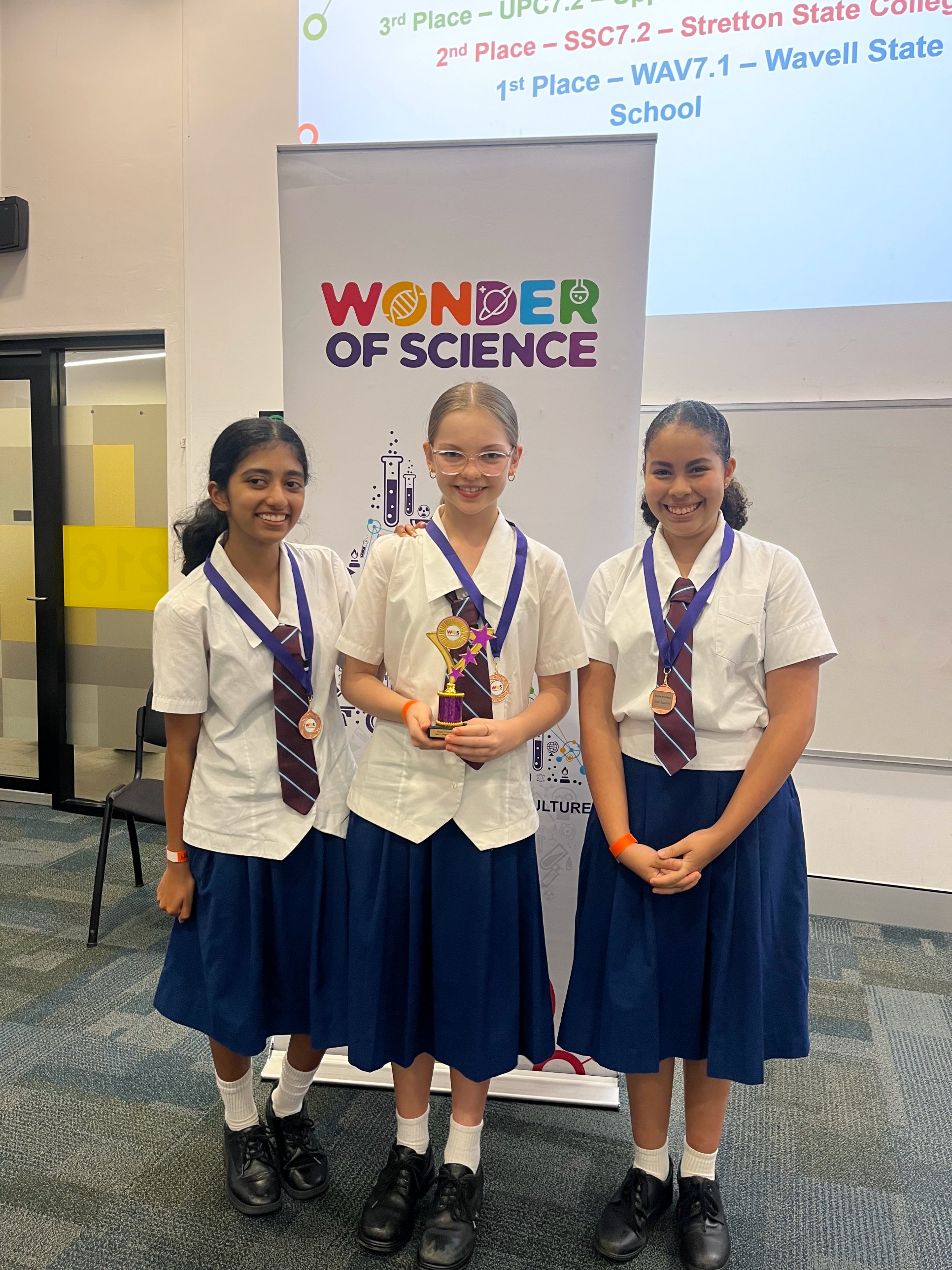
Alt text: Three Wavell Year 7 students with their Regional Champions trophy and medals at the UQ Wonder of Science Regional Conference.
What is the Wonder of Science program?
Wonder of Science is an inquiry-based learning program run by The University of Queensland. At Wavell, Academic Excellence and extension Science students in Years 7, 8 and 9 complete one unit of their science course through it each year.
Instead of following a set experiment, students start with a question. They plan their own investigation, collect real data and analyse it the way working scientists do. The strongest team from each class is then selected to present its findings at the regional conference, in front of UQ scientists and student teams from other schools. Teams that place are invited back for the State Conference later in the year.
What did the winning team investigate?
The team built their project around a scenario with real stakes: Sasha has been bitten by an unknown bug, and the team must classify it and find a cure before time runs out.
Classifying an organism means working the way a biologist does: observing its features closely, comparing them against known groups and narrowing down what it is. In the team's scenario, getting that right was the only way to find the cure.
How did the other Wavell teams go?
Four Wavell teams were presented at the regional conference. All four were commended for the depth and authenticity of their data and for the science behind their analysis.
The Year 8 and 9 teams did not place this year, but each stood in front of an expert audience of scientists, teachers and peers to present and defend a complex investigation. For students aged 12 to 15, that is a real test of understanding.
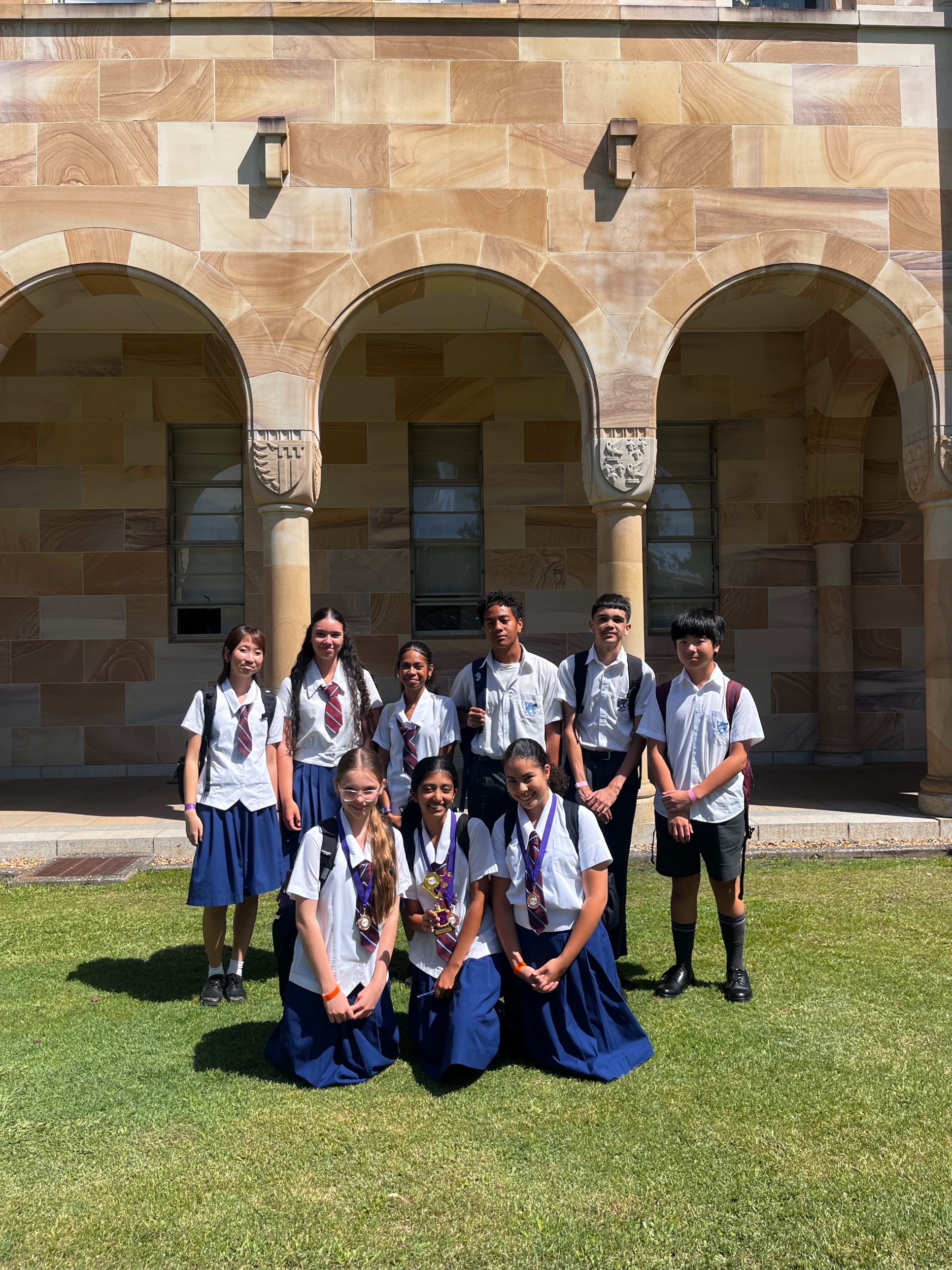
Alt text: Wavell's Wonder of Science teams outside the sandstone arches of UQ's St Lucia campus.
Why does this matter for students?
Presenting to scientists asks more students than a test does. They must know their data well enough to explain it, answer questions they did not prepare for and stand behind their conclusions. Those are the same skills senior Science subjects assess through student experiments and research investigations, so Wavell students start practicing them from Year 7.
How can my child join Academic Excellence Science?
Academic Excellence is one of Wavell's six Programs of Excellence, alongside Dance, Drama, Music, Netball and Rugby League. Entry to the Academic program in Year 7 is by application and testing. Find out more about enrolling at Wavell or explore our Programs of Excellence page.
Frequently asked questions
What is inquiry-based learning?
Students start with a question rather than a worksheet. They plan how to investigate it, gather and analyse their own data, and present what they found, which is how science works outside the classroom.
Which Wavell students take part in Wonder of Science?
Academic Excellence and extension Science students in Years 7, 8 and 9 complete one unit through the program each year.
Do students work with university scientists?
Yes. The top team from each class presents its findings to UQ scientists at the Wonder of Science Regional Conference.
Related stories: Science beyond the classroom · How Wavell brings science to local primary schools
Follow us on social media to stay up to date with the latest information.
Wavell State High School Instagram Page
Wavell State High School Facebook Page