What is Impact 2030?
Impact 2030 is a Year 9 Humanities subject built around the 17 UN Sustainable Development Goals, which the United Nations has set for 2030. Students choose a goal connected to their own values, research the problem behind it and develop a practical response.
Wavell runs the subject with Future Anything, an organisation that teaches young people entrepreneurship and problem solving. It was delivered by teachers Brett Dascombe and Shane Burnett, with the Humanities team.
How did students develop their ideas?
The research began in Term 3. Each team started with a scenario card for one of the goals, describing a community facing a real problem: girls in "Equaltown" missing out on secondary school and leadership roles, or farmers in "Meadowville" rebuilding after a disaster. Students researched the problem behind their scenario, then started sketching responses. Their topics ranged from coral reef damage and housing affordability to deforestation, poverty and access to dental care.
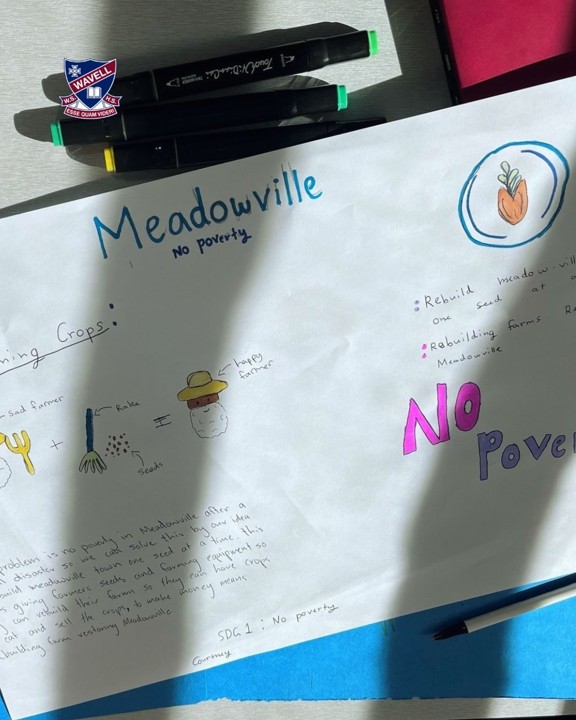
An early sketch for SDG 1, No Poverty: rebuilding Meadowville one seed at a time.
Before anything was built, each idea was tested. In a full-day workshop led by Joshua McHugh from Future Anything, students talked through their thinking with our Principal, Deputy Principals, teachers, senior student mentors and mentors from our Rugby League program. The mentors' job was to listen, ask hard questions and push each idea further. Our thanks to Joshua and the Future Anything team for facilitating the day.
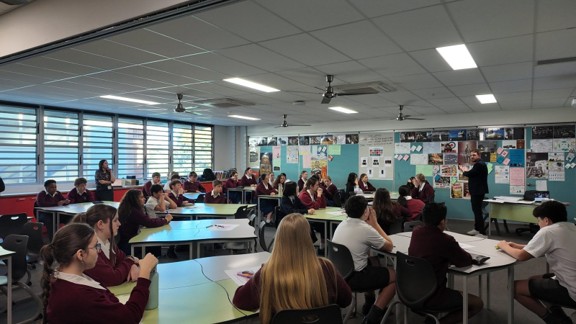
The Impact 2030 workshop with Future Anything.
Teams then refined their ideas and built prototypes. At the Impact 2030 General Assembly, set up like a session of the United Nations, each team stepped up to the podium and presented its solution, from slides and costings to working models.
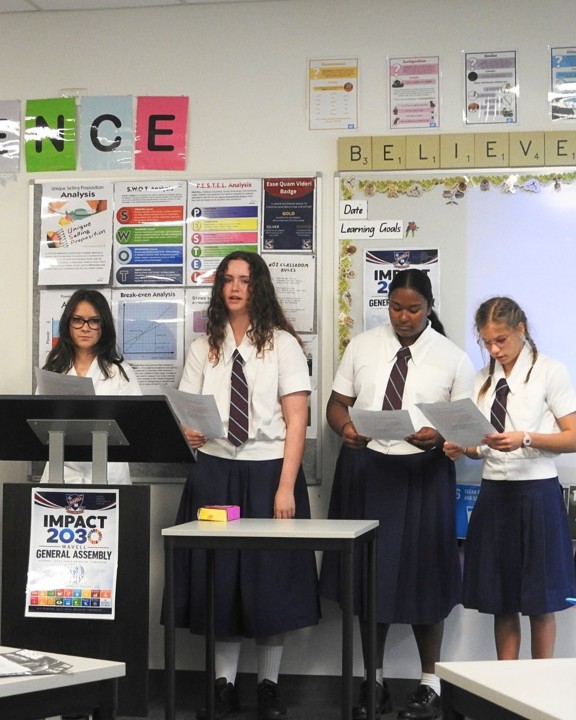
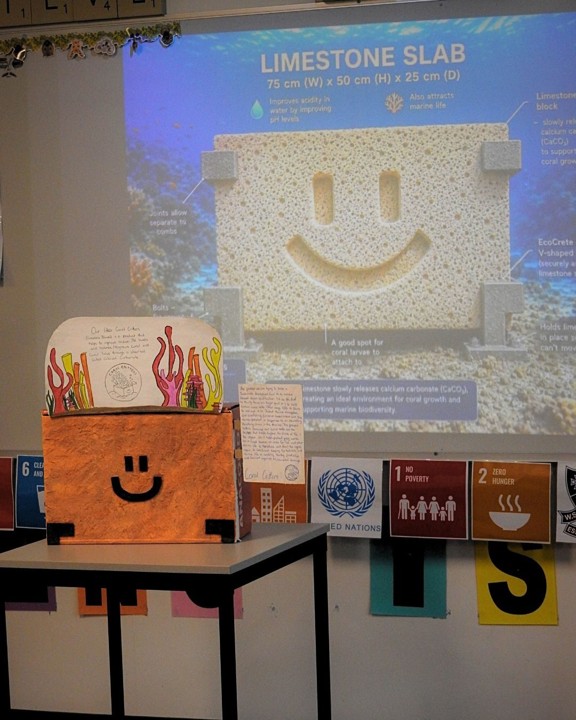
Teams present at the Impact 2030 General Assembly. Coral Critters brought a model of their limestone slab.
In Term 4, students set up stalls at the Impact 2030 Trade Show and presented to the Year 8 cohort. Year 8 students moved from stall to stall, asked questions and used tokens to vote for a People's Choice Award.
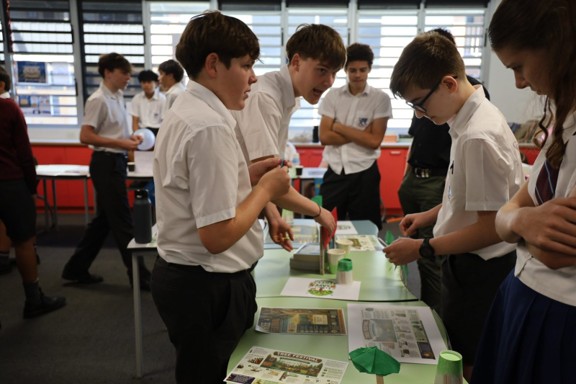
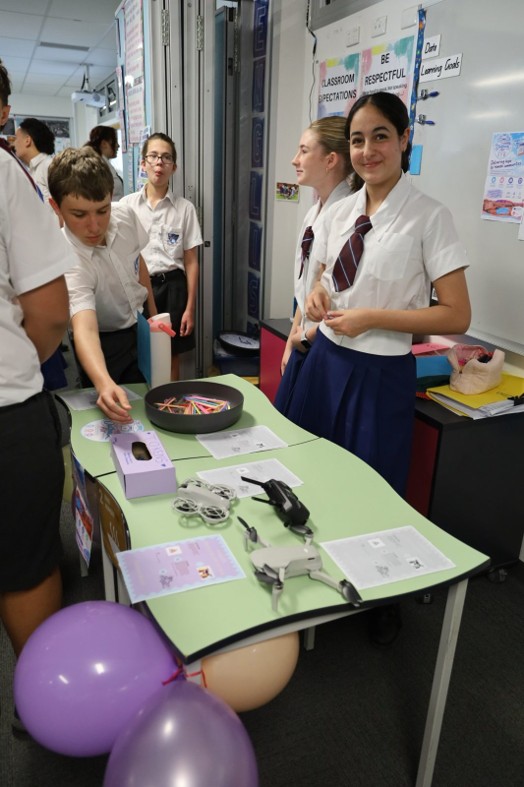
Year 8 students visit the Tree Festival and Outback Air stalls at the Trade Show.
What did students create?
One team, One Cycle at a Time, was named Highly Commended at the 2026 Future Anything Challenge Finals in Term 3, an award given to the top 25% of teams for outstanding passion and potential. Tackling gender equality, the team designed boxes of donated items to help women living in poverty or fleeing domestic violence.
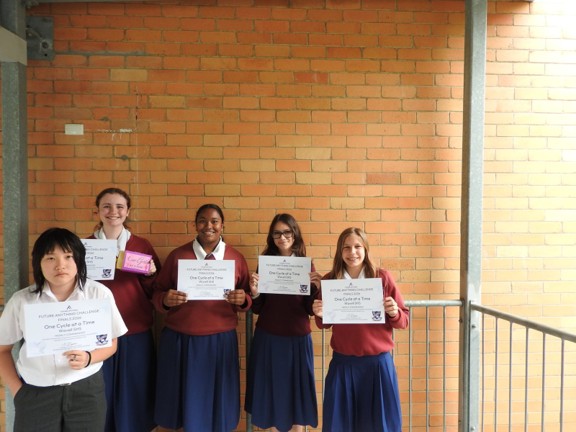
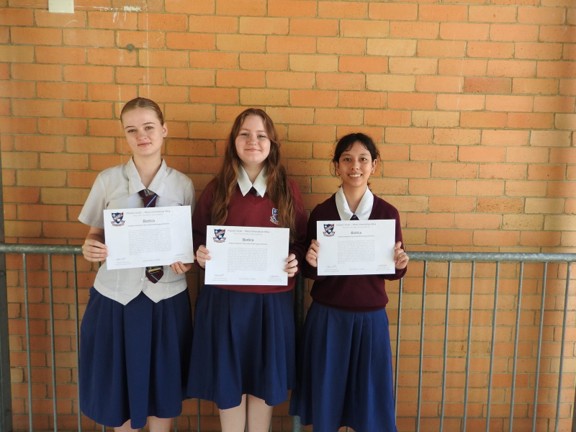
One Cycle at a Time with their Future Anything Highly Commended certificates.
At Wavell, the Humanities team awarded Most Innovative Idea to one team in each class, and named four more Highly Commended:
- Coral Critters (Most Innovative Idea): limestone slabs installed in damaged or dying reef areas, giving new coral a stable surface to grow on. The idea addresses SDG 14, Life Below Water, and matters here in Queensland, where protecting our reefs is so important.
- Biotica (Most Innovative Idea): a game that teaches young people about protecting native plants and animals, including the threat of invasive species. It addresses SDG 15, Life on Land, and is designed to engage primary school students.
- Brush Easy (Highly Commended): a reusable toothbrush designed to improve access to dental hygiene and health care.
- Motion Matters (Highly Commended): an app that encourages people of all ages to get moving through dance, for their health and wellbeing.
- Print Home Australia (Highly Commended): sustainable 3D-printed micro-homes as a response to housing affordability and homelessness, locally and nationally.
- Tree Festival Deforestation Project (Highly Commended): an interactive festival with a recycled forest art competition, a tree-planting challenge and animal habitats built from recycled materials.
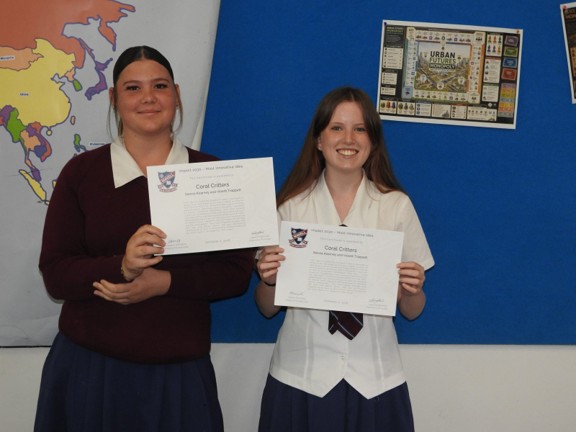
Most Innovative Idea winners: Coral Critters and Biotica.
The Trade Show floor showed the range of thinking across all 51 students. Other ideas included The Castaway, a container that keeps discarded fishing line out of the ocean and away from turtles, dolphins, seals and seabirds; Unbox the Basics, which delivers a box of essentials to a person in need; and Outback Air, which uses drones to deliver supplies to remote communities.
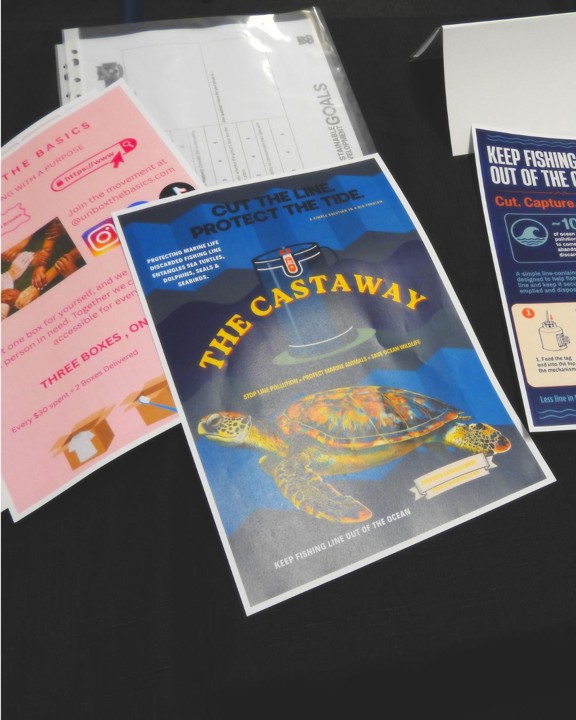
Flyers designed by students for their Trade Show stalls.What did students take away from it?
After the workshop, students were surveyed about what they had learned:
- 92% said they had learned more about entrepreneurship and problem solving.
- 88% said they had found new ways to think about their role in a team.
- 96% said they benefited from working alongside peers with ideas of their own.
"I was able to learn how to work with others better and get more comfortable sharing my ideas." Year 9 Impact 2030 student
Why does this matter for my child?
Impact 2030 asks Year 9 students to do what senior subjects and workplaces will ask of them later: research a real problem, form an argument, take feedback and present their thinking to an audience. The mentoring model also connects younger students with senior students and staff across the school, so Year 9s hear useful feedback from people only a few years ahead of them.
Can my child take part?
Impact 2030 runs again in 2027 for Year 9 students. To find out more about learning at Wavell, explore our Programs of Excellence or find out about enrolling at Wavell.
Frequently asked questions
What are the UN Sustainable Development Goals?
They are 17 goals set by the United Nations to address global challenges such as poverty, climate change and inequality by 2030. Impact 2030 is named after them.
Who is Future Anything?
Future Anything is an organisation that runs entrepreneurship and problem-solving programs for schools. It co-delivers Impact 2030 with Wavell's Humanities team and runs the Future Anything Challenge Finals.
Which year level is Impact 2030 for?
Year 9. The first group took part in 2026, and the subject runs again in 2027.
Related stories: Science beyond the classroom · How three Year 7 scientists became UQ Wonder of Science Regional Champions